Product Overview
Metal sheet is the flat stock behind almost every metal surface you notice in a finished interior — the material that was cut to an opening, folded over an edge and fixed before the room was handed over. This range, item M01, is supplied either as decorative metal sheets for cladding and forming or as a faced panel built on MDF, HDF, plywood or particleboard where a project needs something stiffer behind the face.
Fit-out contractors, joinery workshops and makers of custom metal furniture buy it for two reasons. The surface is real metal, so the reflection and the tone come from the material itself rather than from a printed film that has to be coaxed into looking convincing. And it works with ordinary fabrication: cut on the bench, folded over a return, bonded to a door core, or formed into the profile the drawing calls for.
The trade-off with a reflective face is that it shows handling marks and any drift in tone across a run. That is why the range is organised by finish and by tone-set rather than by alloy alone — the face you choose decides how a wall behaves under light, and that decision comes before sheet size, quantity or fixing.
Surface Finishes & Colour Range
- Brushed — a fine linear grain that softens reflections and hides handling marks on doors, counters and wall panels. It is the quietest face in the range and the one that takes daily contact without announcing it.
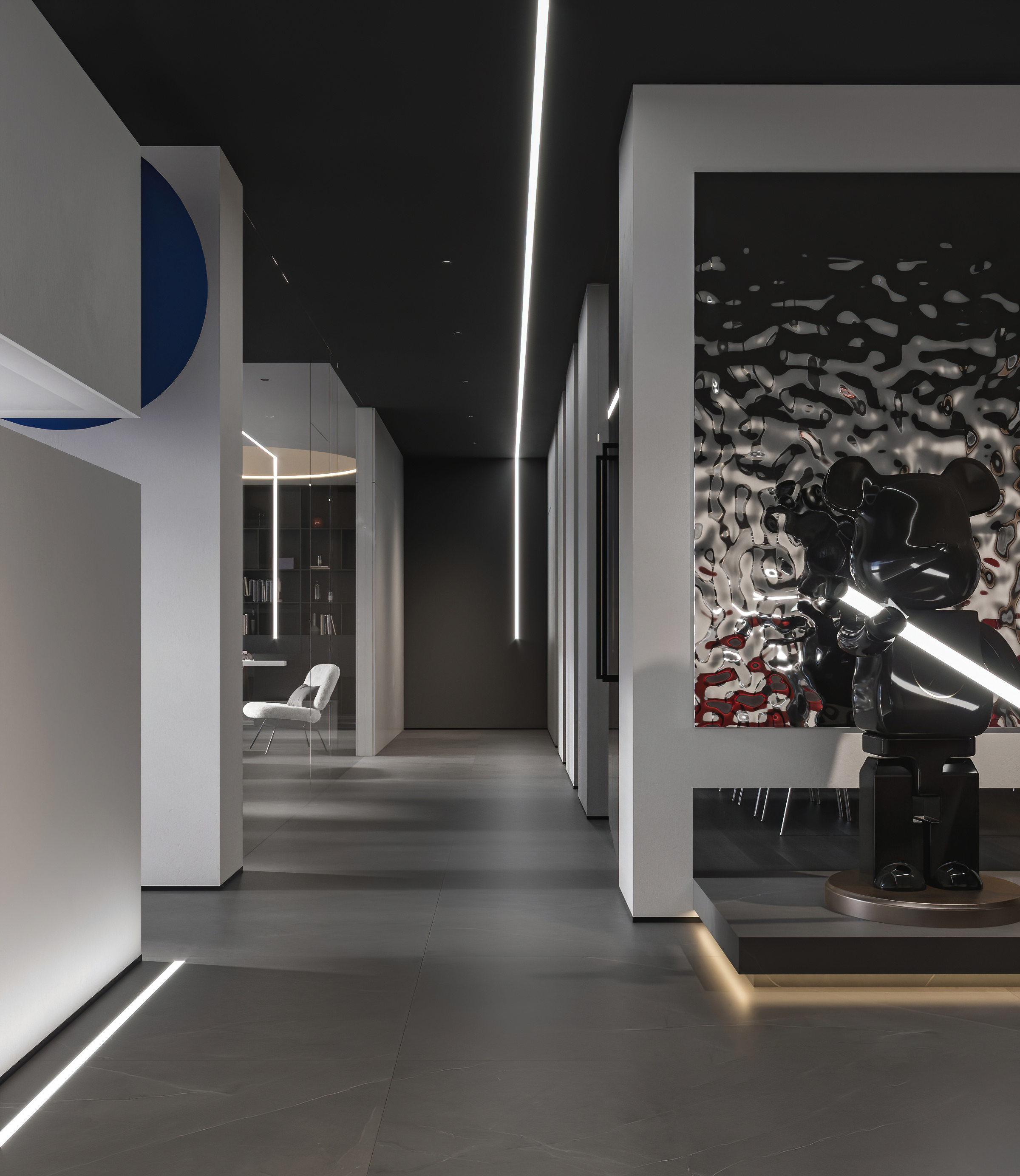
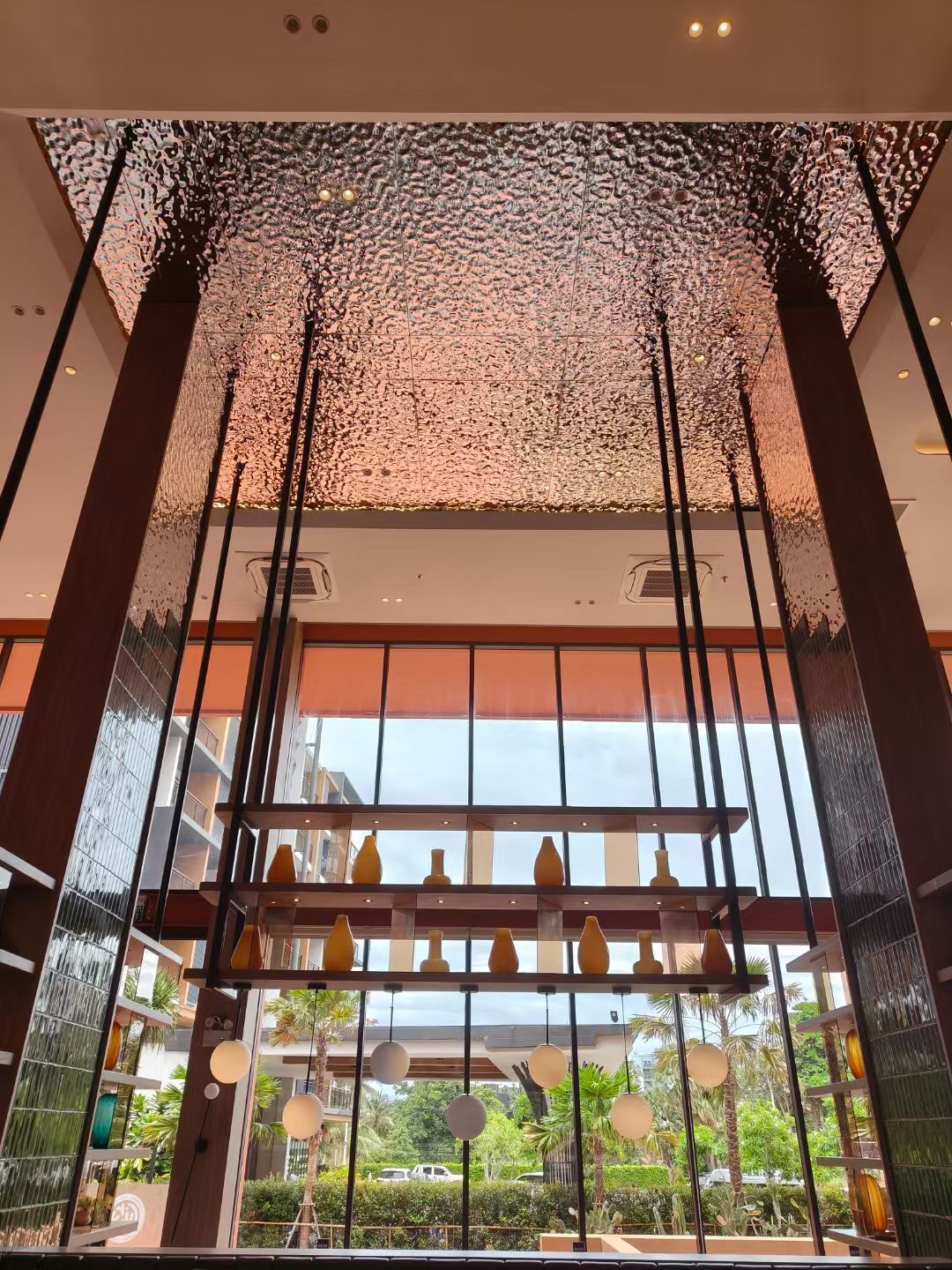
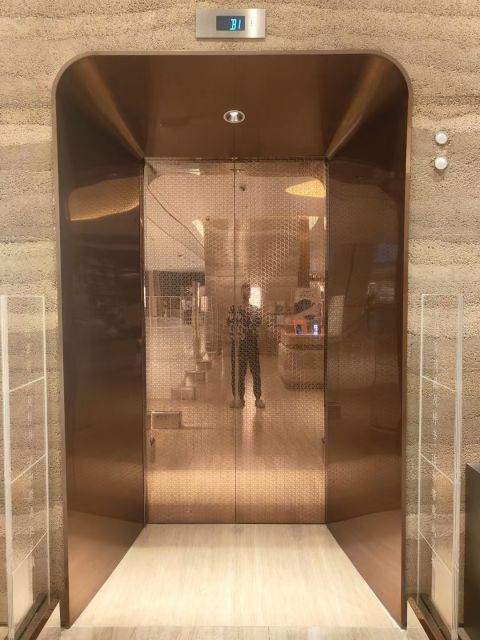
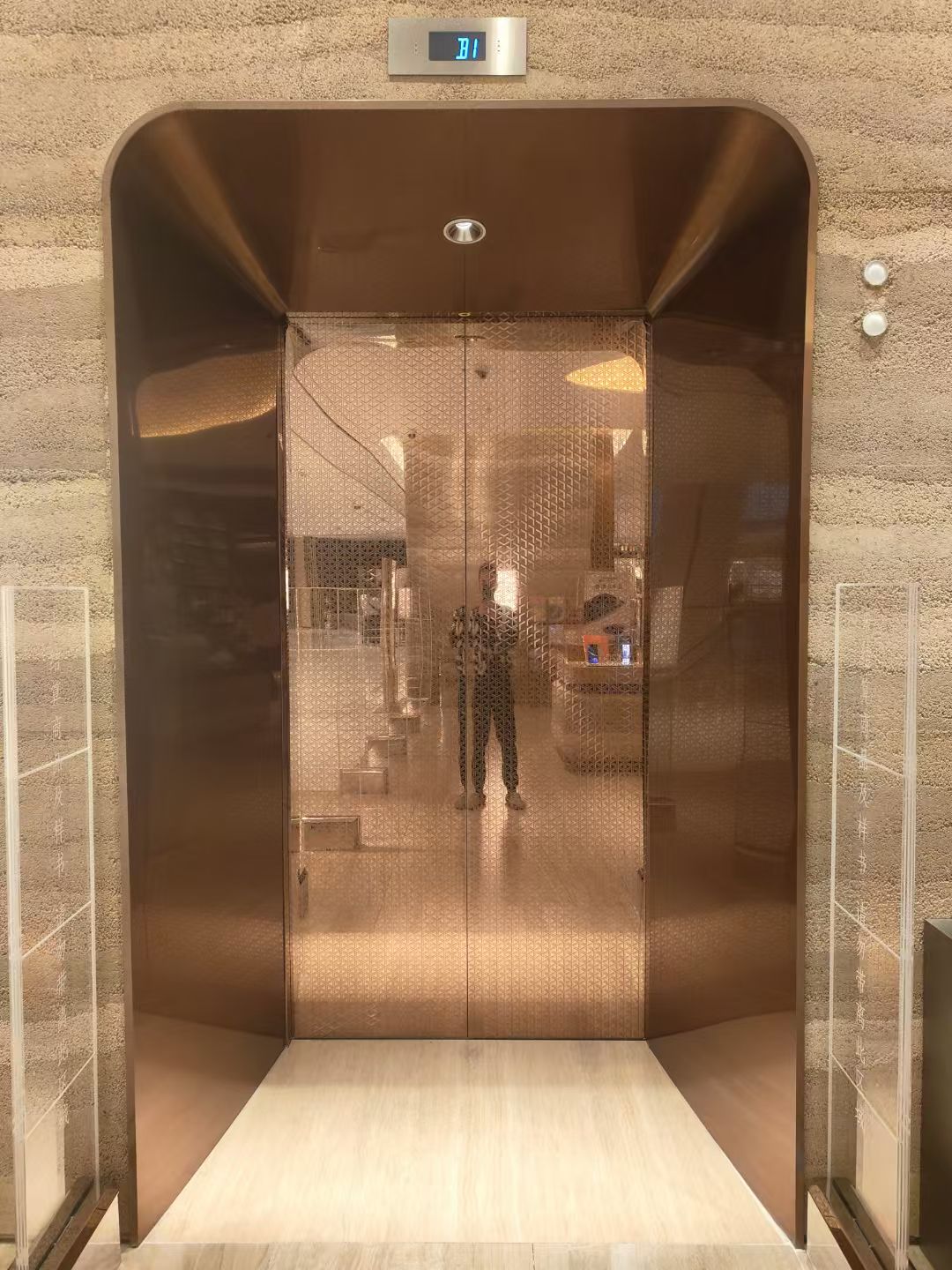
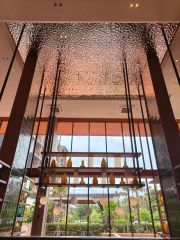
- Mirror-polished — a high-reflectance face that turns decorative metal sheets into the feature itself, particularly on backlit lobby walls where the point is the bounce of light. The reference sheet for this range is shown in mirror-finished copper.
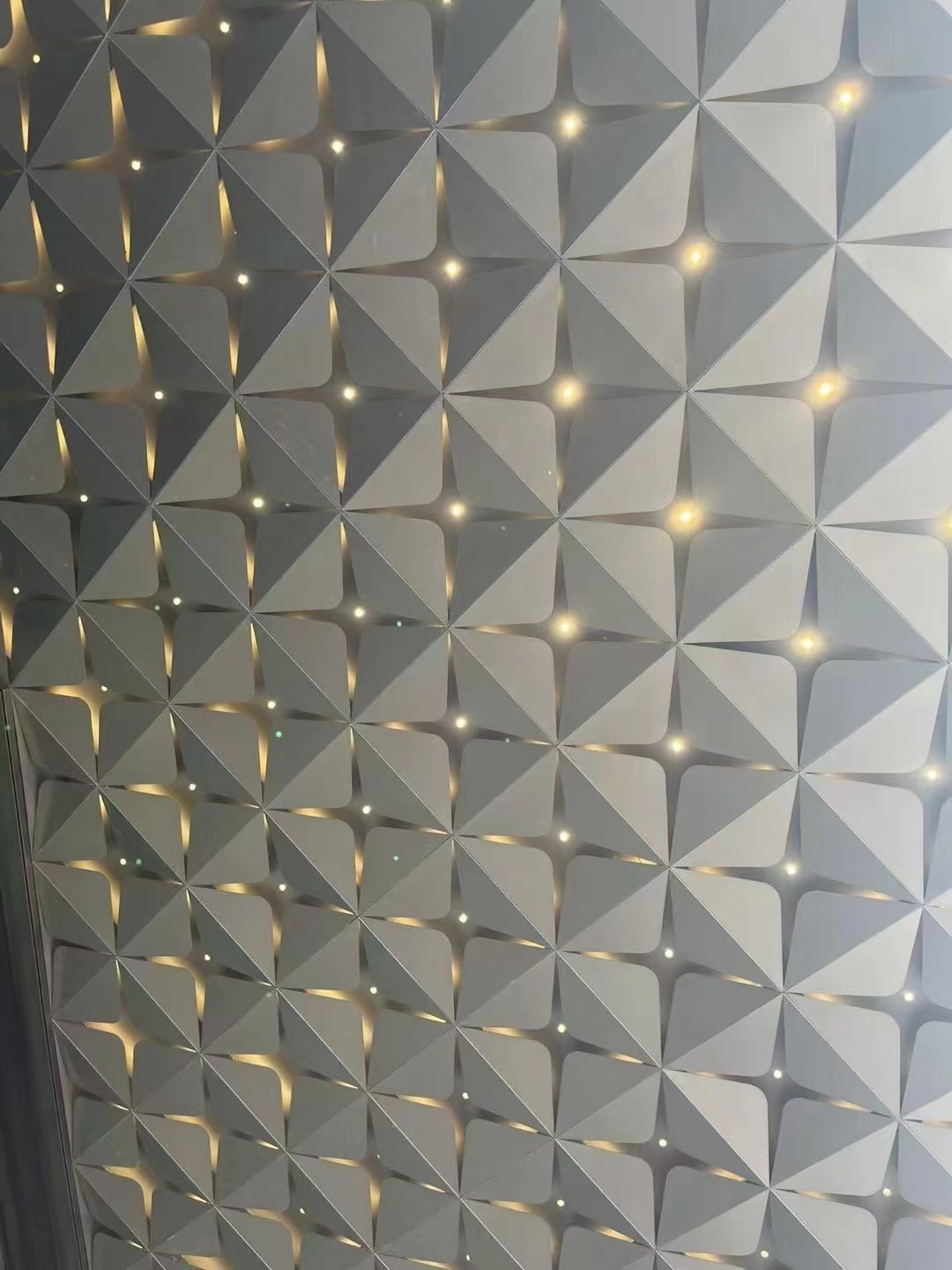
- Embossed and patterned — raised relief, perforations and laser-cut detail for feature walls, screens and ceiling panels; the shadow line carries the pattern, so the metal sheets still read at close range and not only from across the room.
- Anodised — the colour sits in the oxide layer of the metal rather than on top of it, which is what holds a tone on a face that is touched all day.
- Powder-coated — colour held in a durable film, keeping a consistent tone across a commercial or office fit-out and opening up colours the bare metal cannot reach.
- Colour range — silver, bronze, gold, champagne and custom tones matched to the project palette, with the approved tone recorded before the run starts.
- Mixing faces in one scheme — a brushed wall with a mirror band, or a champagne panel against bronze trim, still reads as one material family, because the tones are matched rather than simply similar.
Installation & Fixing
- Check the substrate first. Blockwork, plasterboard, a joinery carcass and a door core each hold a sheet differently, and the fixing method follows the substrate rather than the other way round.
- Choose the fixing: mechanical fixing where a panel may need to come off again for access, adhesive bonding where the face must stay uninterrupted and the wall behind it is sound and flat.
- Set out the joints before anything is cut. On a long run, plan the sheet breaks against the wall module so the seams fall where the eye expects them, not where the offcut happens to land.
- Cut and fold to the opening. Forming the edge is what keeps a wall panel looking like part of the construction rather than a sheet applied over it, and on commercial doors it is also what protects the core at the lock and hinge line.
- Fix from the centre outward on metal sheets, so the face stays flat and any tolerance is pushed to the perimeter where a trim can absorb it.
- On corrugated metal siding sheets, fix along the profile crests on a consistent grid, and let the profile span between supports instead of flattening it back against the wall.
Applications
| Application | How the sheet is used |
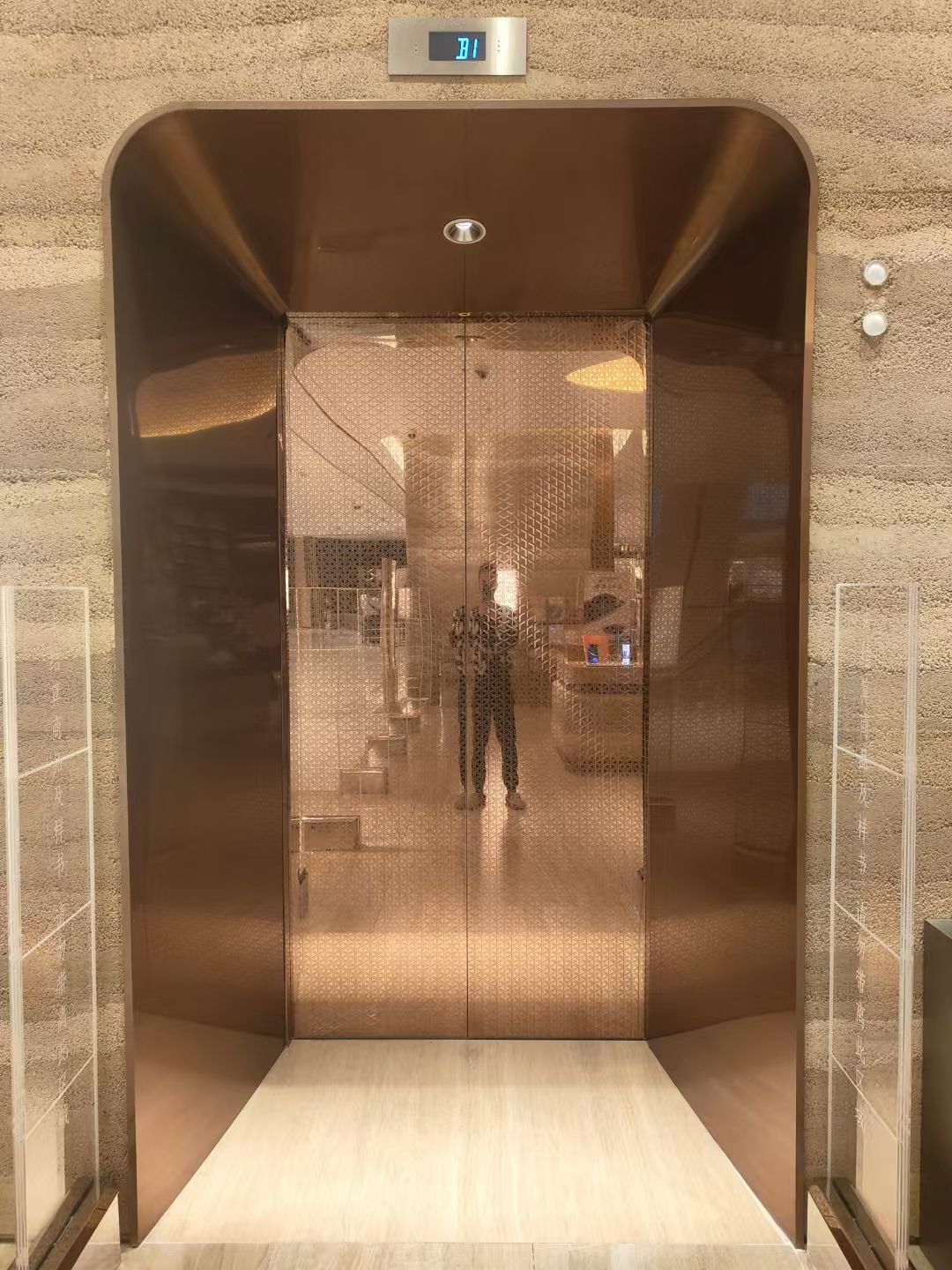
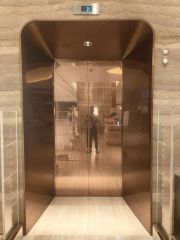
| Lift interiors | Flat panels for cab walls, ceilings and door surrounds, with the arch over the entrance bent from one piece so the curve carries no joint |
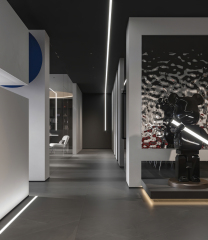
| Hotel and office reception | Mirror-polished or bronze faces set behind a desk or a sign, often backlit so the reflection becomes the feature rather than the surface |
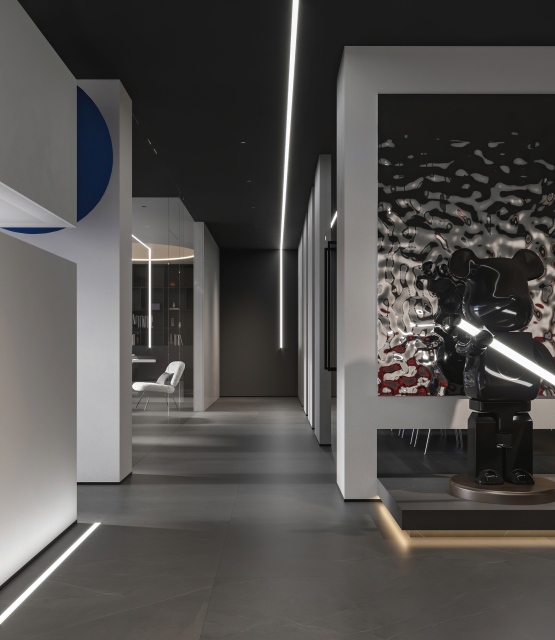
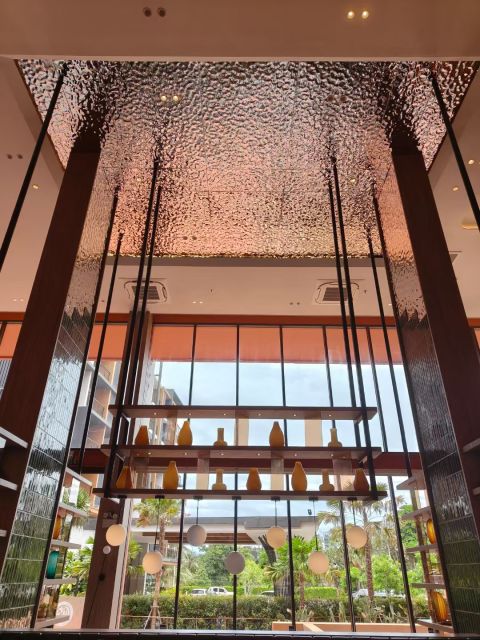
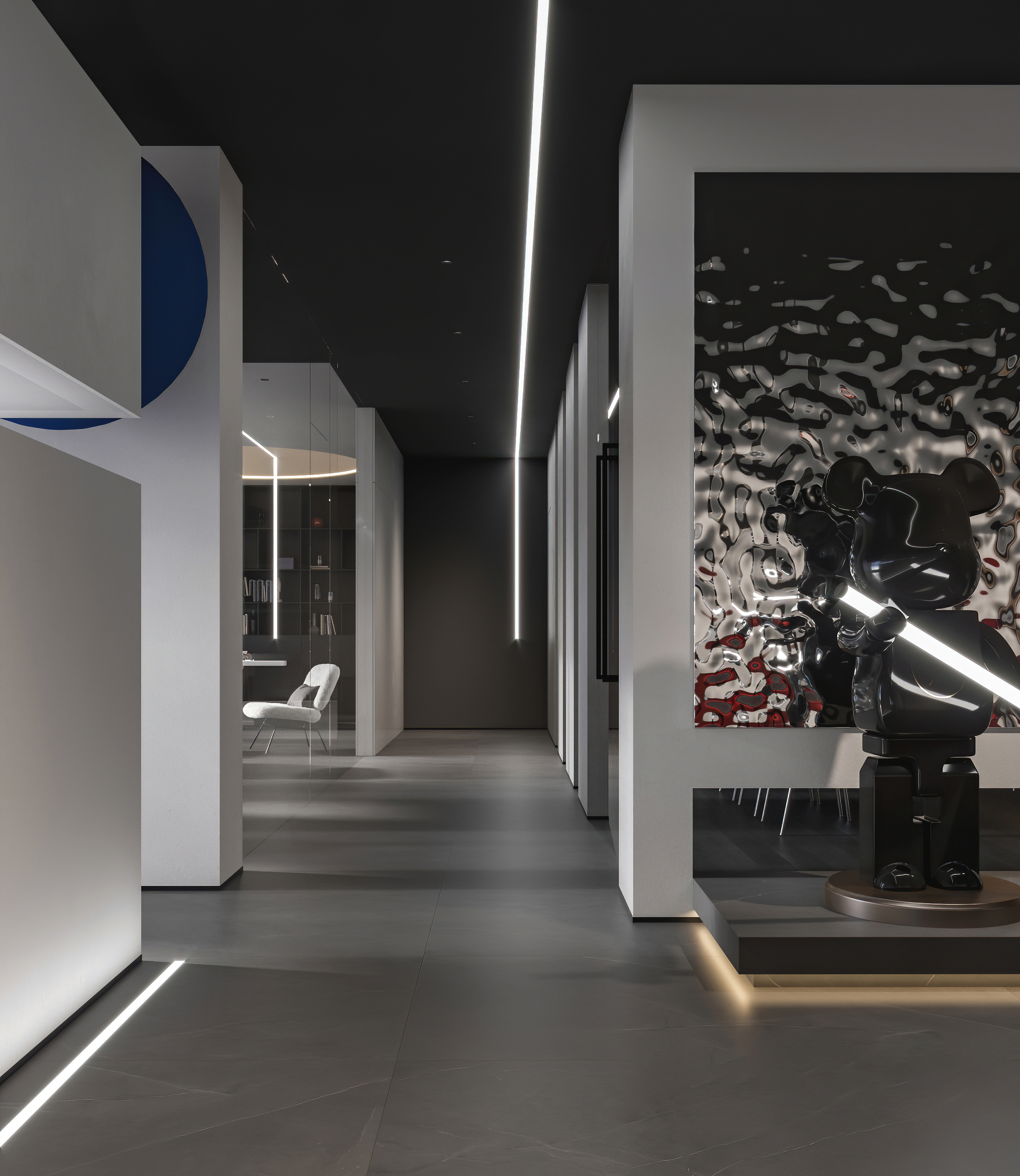
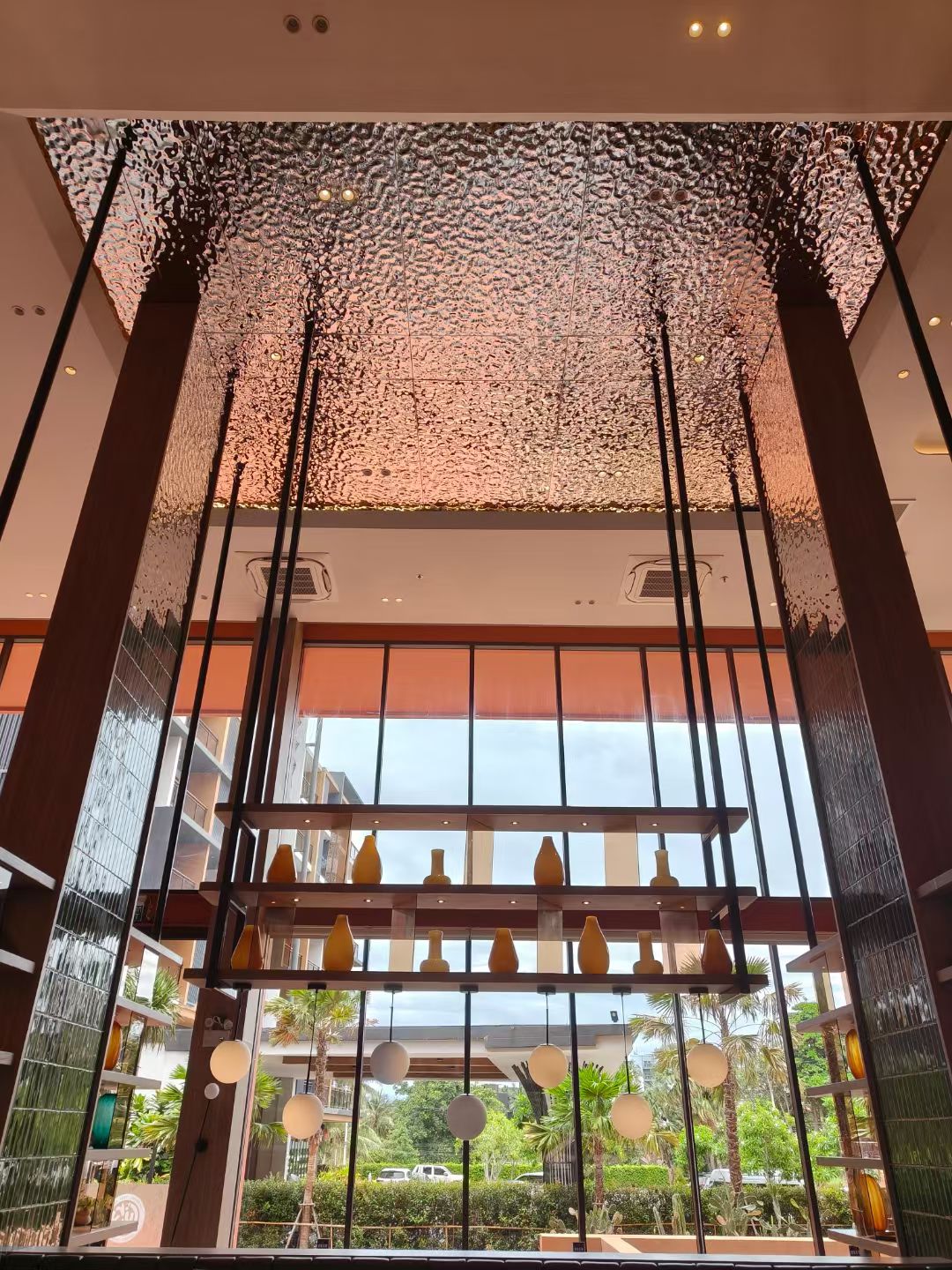
| Showroom and display walls | Rippled and embossed faces that break reflections along a long elevation and stay interesting at walking distance |
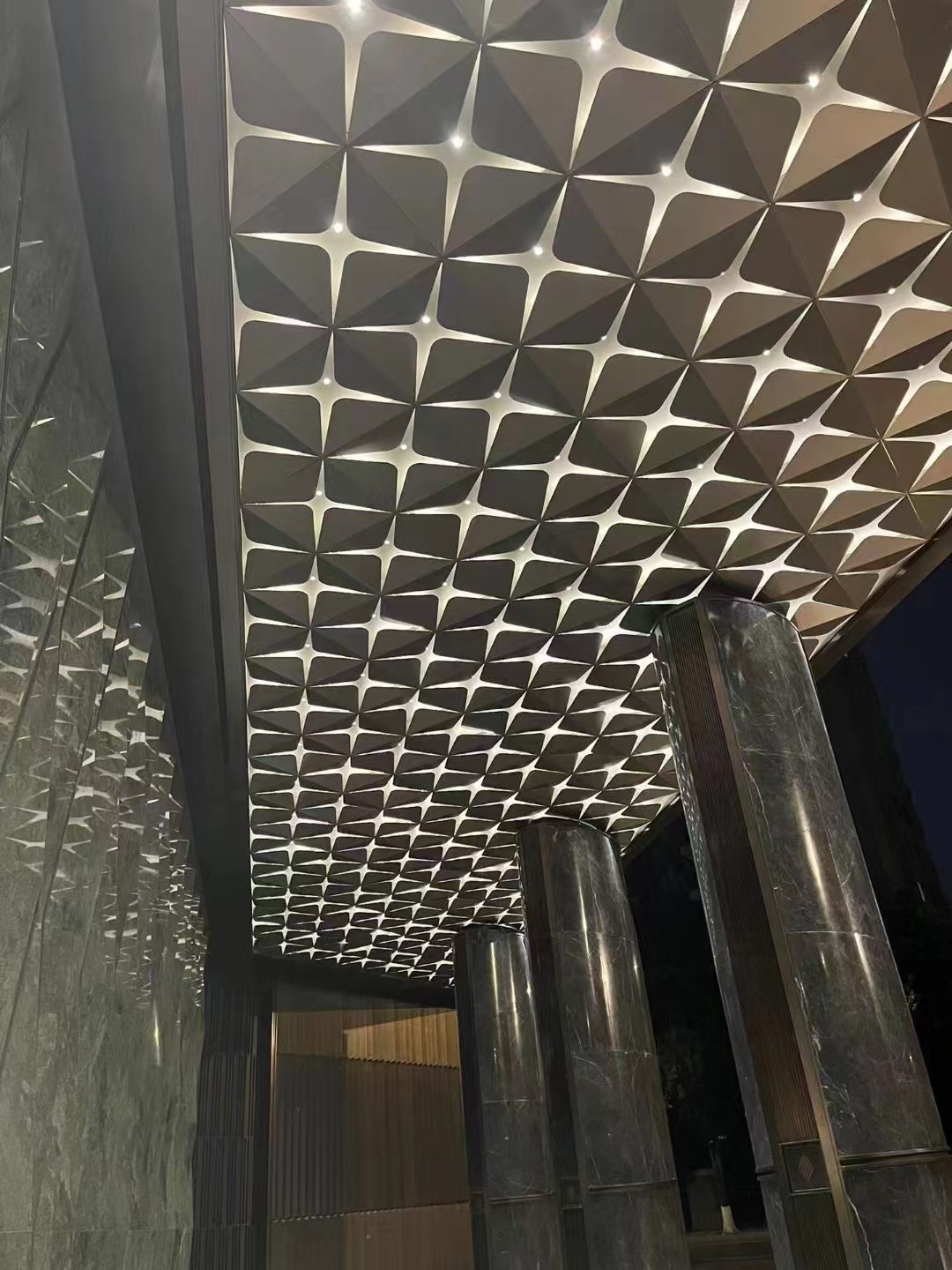
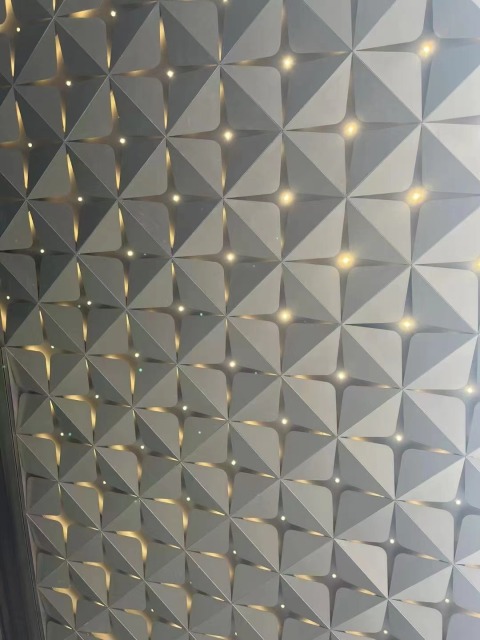
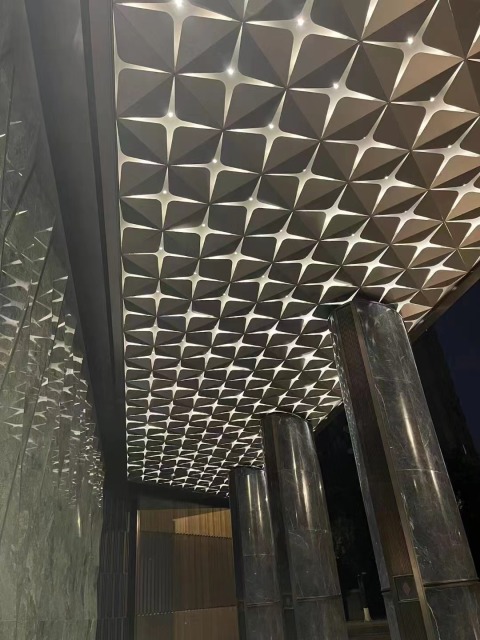
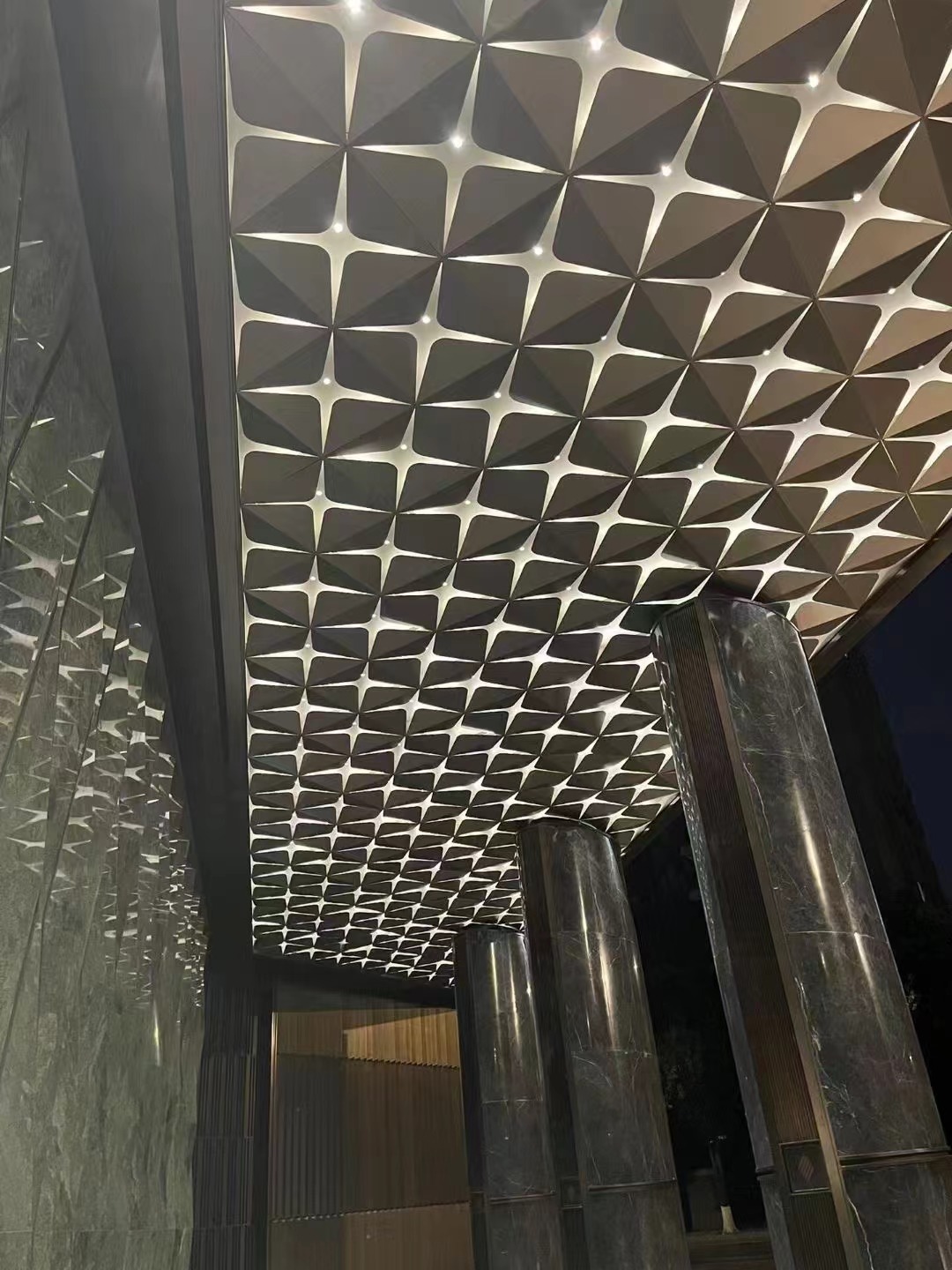
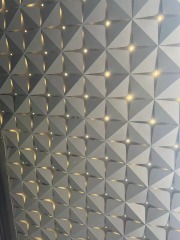
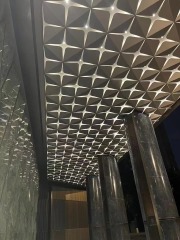
| Ceilings and soffits | Wedge profiles laid as a backlit ceiling above circulation routes and bar areas |
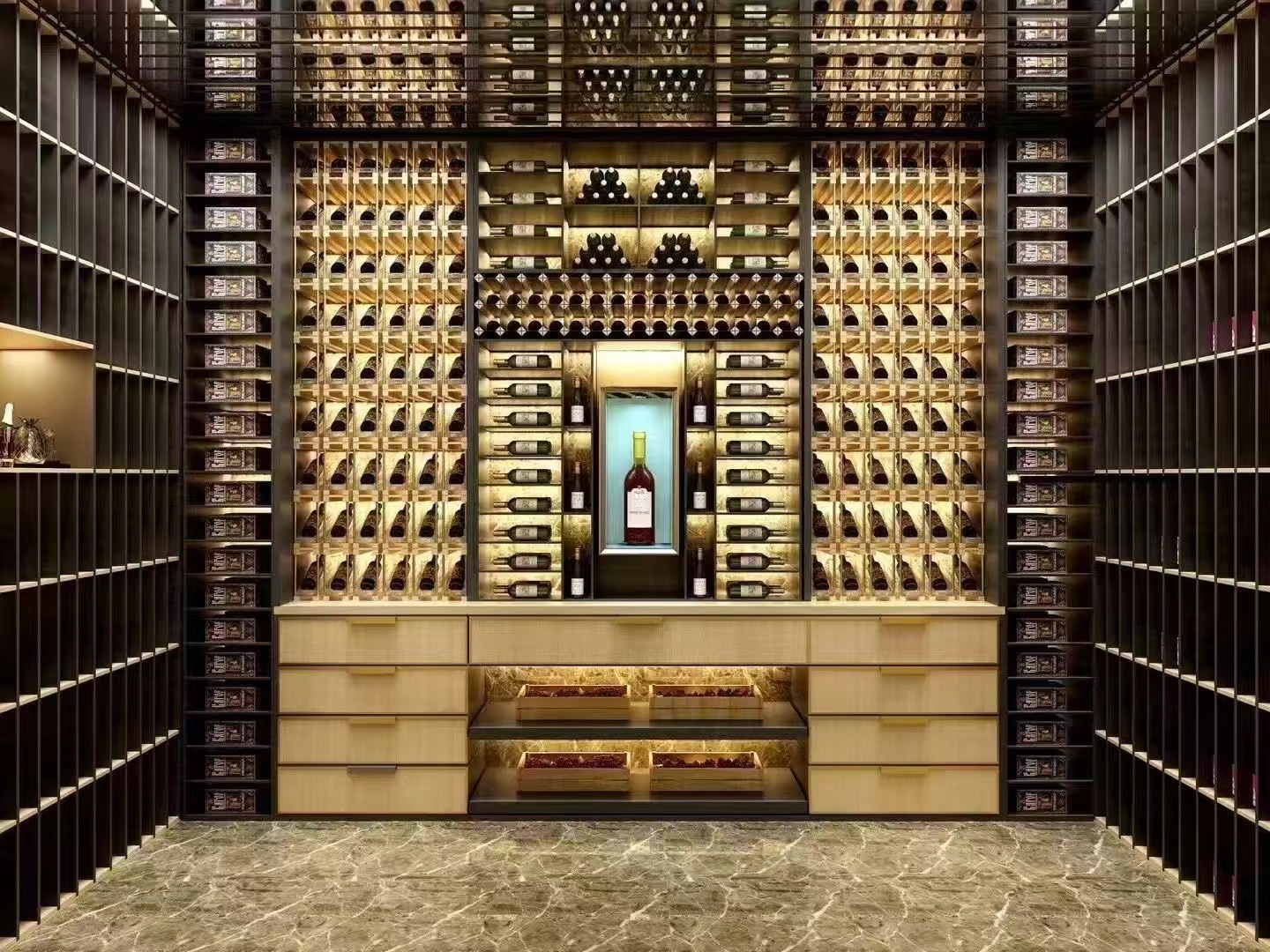
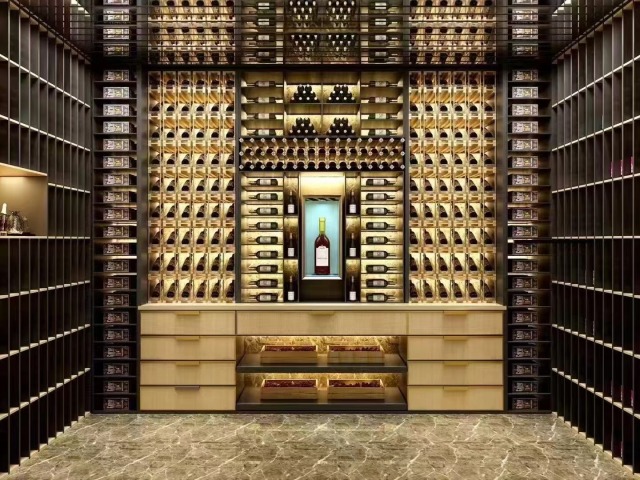
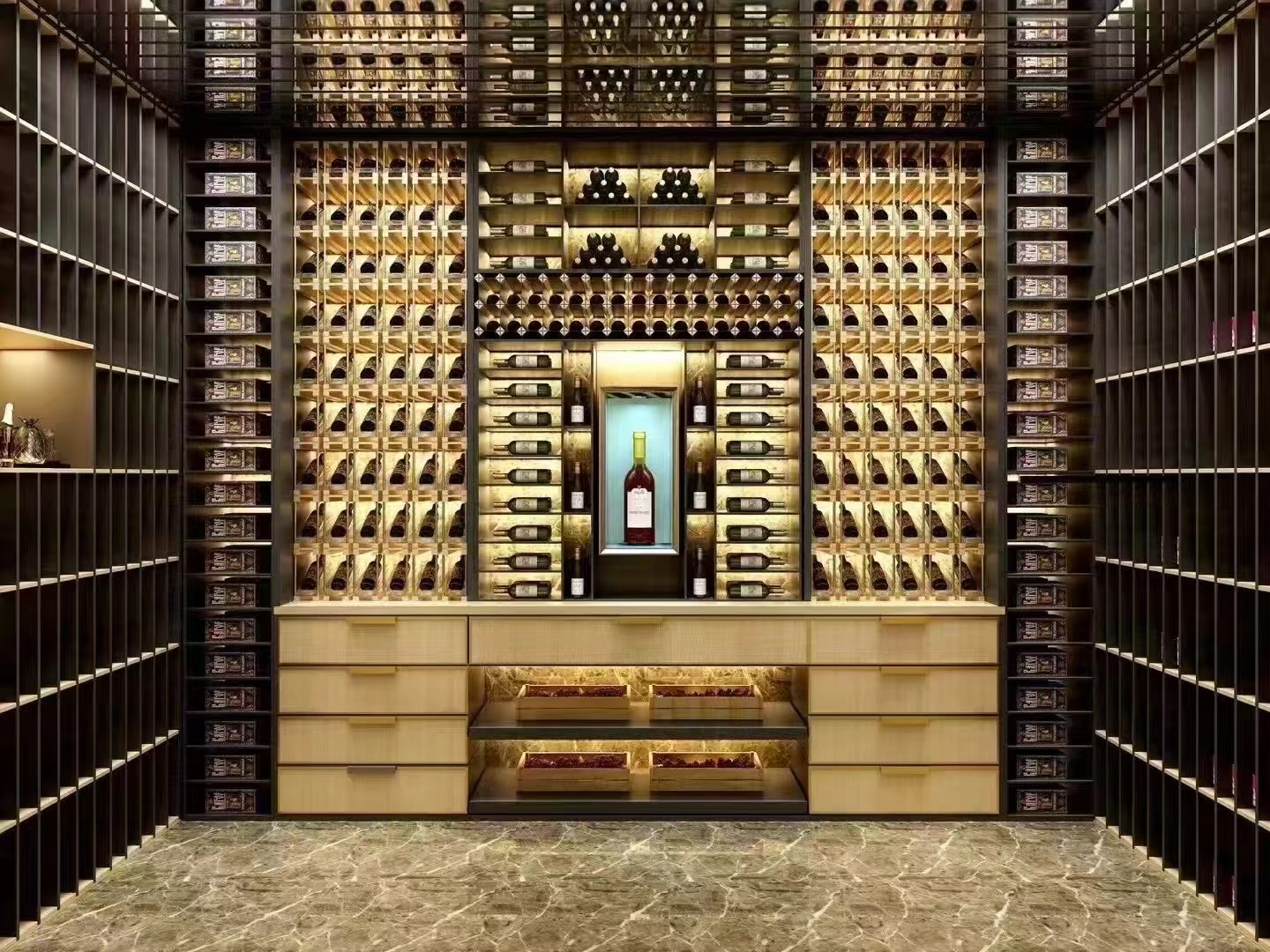
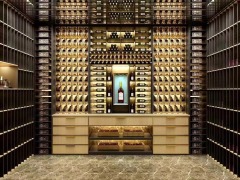
| Wine displays and joinery | Copper and brushed faces inside a lit cabinet, where shelf lighting lifts the metal |
| Commercial doors | Sheet bonded to a door core or folded round the leaf, so the skin stays flat and a handle or closer does not dent the face |
| Custom metal furniture | Cabinet fronts, drawer faces and bar cladding, cut and folded to the maker's own dimensions rather than to a standard module |
| Custom office furniture | Reception desks, credenzas and storage fronts where the metal has to carry through the rest of the office scheme |
| Exterior facades | Wedge and rippled profiles specified as metal siding sheets, where the profile gives depth and stiffness across the elevation |
Sheet Specifications
| Item | Specification |
|---|
| Item reference | M01 |
| Base material | MDF / HDF / Plywood / Particleboard |
| Standard size | 1220×2440mm / Custom sizes available |
| Standard sheet sizes | 1000 × 2000 mm and 1220 × 2440 mm |
| Thickness range | 3mm – 25mm |
| Surface treatment | UV coating / Melamine lamination / PVC film |
| Fire rating | B1 (Flame-retardant optional) |
| Environmental standard | E0 / E1 formaldehyde emission |
| Installation | Mechanical fixing / Adhesive bonding |
| Maintenance | Wipe with soft cloth and neutral cleaner |
| Routine care | Neutral detergent and a microfibre cloth |
| Quality testing | CE, SGS, ISO9001, ASTM |
Profiles & Fabrication Options
- Flat panels — wall cladding, elevator interiors, custom office furniture fronts and door skins for commercial doors, where a clean uninterrupted face is the point; the sheet is cut to the opening and the edge folded or trimmed so no raw cut shows. - Wedge profiles — formed into repeating wedge shapes that give a facade real depth and stiffen the panel across wide spans, so a wide run needs less support behind it than a flat sheet of the same span. - Corrugated profiles — corrugated metal sheets formed into repeating wave shapes. - Rippled surfaces — also supplied as corrugated metal sheets, these faces break reflections into a soft wave pattern that suits long wall runs and large panels where a flat mirror would be too much. - Full-panel bending — arched surrounds such as lift door arches formed from a single piece, so the curve reads as one surface with no visible joint and no trim to line up on site. - Laser-cut and perforated screens — patterns cut rather than pressed, used for dividers and ceiling panels where the metal has to let light or air through while still reading as a solid surface from a distance.
Ordering & Confirmation
- Send the drawing or a marked-up elevation with the finish, tone, sheet format and the quantity in sheets. Add a cutting allowance for openings, and for any piece that has to be formed as one length.
- Approve the tone from a physical sample rather than a screen. Ask your sales contact for the sample or chip for the finish you are considering, and check it under the light of the finished room, because mirror and brushed faces shift with the light source.
- Say whether you need flat sheet only or formed profiles supplied ready to fix. Profiles and full-panel bends are made to order, so the tooling and the time needed change with the shape.
- Confirm packing and shipping arrangements for your destination before the order is placed. A formed profile needs more protection in transit than a flat sheet, and the packing changes with the format.
- Confirm the current minimum order, lead time and payment terms with your sales contact when you order. These depend on the finish, the format and the quantity, so they are quoted per order rather than held as a fixed figure.
Supply Chain & Delivery Assurance
Guangzhou Chuxin Import & Export works as the coordination point between your project and the suppliers who make it. We consolidate the categories a fit-out needs into a single order, match each specification to suppliers in our global procurement network, and follow it through sampling, pre-shipment inspection, export documentation and cross-border delivery to the Americas, Europe, Southeast Asia and the Middle East. Custom sizing and OEM coordination are arranged around your drawings and programme, and one contact tracks the order from approved sample to arrival, so a multi-category package moves on one schedule.
The metal line covers aluminium, brass, copper and stainless steel sheet, plus a general metal sheet for work that does not need a named alloy. It sits inside a wider decorative surfaces portfolio — fabric-covered panels, glass and mirror materials, leather-finish surfaces, stone slabs, and wallpaper and wallcoverings — all handled by the same team. In practice that means metal, stone, glass, panel and wall finishes for one commercial interior or facade project can be sourced from one supplier and approved against each other, rather than chased across five vendors with five sample books. Custom sizing and OEM production are supported with flexible finishes, so a specification is matched to your drawings, your approved sample and the project schedule instead of being forced into a catalogue module. Joiners, fit-out contractors, custom furniture manufacturers and interior studios send the drawing and the tone they have signed off; we come back with the sheet format, the profile and the finish route that meets it. Catalogues, the specification sheet for this range and installed project images are available from our team — as useful at submittal stage as they are on the fabricator's bench.
FAQ
Can these sheets be used for custom metal furniture?
Yes. Custom furniture manufacturers build cabinet fronts, drawer faces and bar cladding from the flat sheet, cutting it to their own dimensions and folding the edges so the face has a crisp return. The same stock goes into custom office furniture — reception desks, credenzas and storage fronts — where a metal face has to sit alongside the rest of the palette without competing with it.
Can you match a tone to our project palette?
Yes. Beyond silver, bronze, gold and champagne, custom tones are matched to the palette and recorded, so a second run for the same scheme stays on the agreed shade. Because decorative metal sheets change with the light, the match is made against a physical sample and approved in the lighting the surface will actually be seen in, not on a screen.
Is the sheet supplied flat, or can it arrive already formed?
Both. Flat sheet is the default for cladding, door skins and furniture fronts, where the fabricator cuts and folds on the bench. Wedge, corrugated, rippled and full-panel bends are formed to the drawing before delivery, which is usually the better route for a lift arch or a repeating facade module, because the profile comes off one set of tooling and repeats exactly.
What is the difference between the sheet and the faced panel?
A metal sheet is the face on its own — used where the piece will be formed, or bonded to a door core or joinery carcass during installation. The faced panel is the metal face on an MDF, HDF, plywood or particleboard core, which is what a wall panel, a cabinet front or a drawer face usually wants, because the board holds a true plane and the edge can be finished like any other panel.
Do the faces need protecting while the rest of the fit-out is finished?
Yes, and it is the most common cause of a disappointing handover. Metal sheets are normally left with their protective film in place until wet trades, plastering and joinery work are done, then stripped, wiped down and checked under the final lighting. Keep tools and offcuts away from the face in between, and do not let adhesive or sealant cure on a mirror or brushed surface.
Can the sheets be used outside as cladding?
Wedge and rippled profiles are used externally as metal siding sheets, where the form gives the elevation depth and stiffness. For an exterior run, tell us the exposure and the framing at enquiry stage, because the fixing detail and the substrate matter far more outside than in, and some faces are specified for interior work only. Corrugated metal sheets on a sheltered facade and the same profile on a fully exposed one do not take the same fixing detail.